


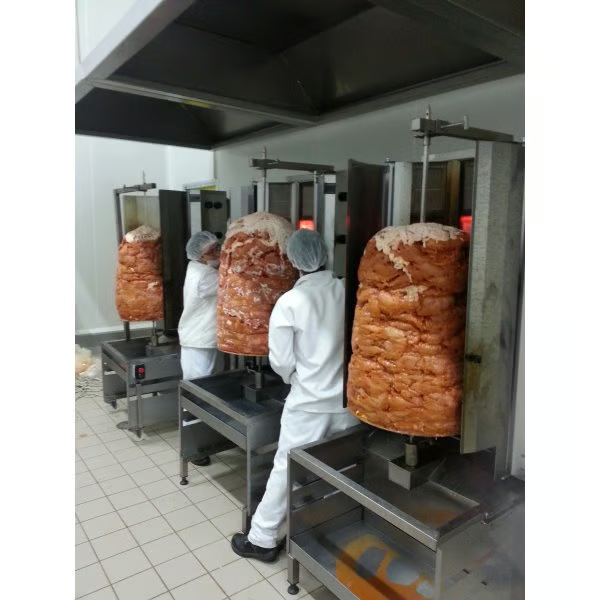
How to set up a doner kebab factory?
First, a comprehensive business and investment project must be prepared for the facility to be established. Within the scope of this project, every detail is determined, including whether the facility will be constructed from scratch or an existing building will be renovated and reconfigured, the layout of production areas and machinery, the organization of workspaces, and the number of employees required in each department. In addition, the facility’s entire technical infrastructure is designed, including hot and cold water lines, electrical and other necessary utility systems, production processes, work areas, and operational requirements. Once the project has been completed, procurement lists covering the machinery, equipment, materials, and other requirements necessary for the installation and commissioning of the facility are prepared. In the final stage, all procurement processes are carried out in accordance with the budget and project requirements agreed upon with the investor. Suppliers are evaluated, and the facility is prepared for complete installation and commissioning.
What is a Doner Kebab Factory Investment?
Döner factory investment is a comprehensive food production project designed to manufacture ready-to-use döner cones and, if requested by the investor, packaged, cooked döner products. Once the facility is operational, it will be capable of producing and selling döner cones in various weights, ranging from 6 kg to 150 kg, depending on the product range and production capacity. The types of products to be manufactured can be determined according to the investor’s target market and commercial preferences. The product portfolio may include: Beef leaf döner Minced-meat döner Mixed beef and minced-meat döner Chicken döner Turkey döner Lamb döner Custom döner varieties developed according to the investor’s specific requirements and needs The product range and production model will be shaped entirely according to the investor’s target market, sales channels, and commercial strategy. Accordingly, the facility can be designed to accommodate both the production of ready-to-use döner cones in different weights and, if required, the production of cooked and packaged döner products. This approach is intended to provide the investor with a flexible and scalable production structure capable of serving different customer groups and sales channels.
What Are the Costs of Setting Up a Döner Factory?
During the establishment of a döner factory, the main investment categories generally consist of building and facility renovation, production machinery, equipment and auxiliary materials, as well as cold storage facilities and refrigeration systems. The total investment cost will vary depending on the size of the facility, production capacity, product range, existing condition of the building and infrastructure, specifications of the machinery and equipment to be used, and the investor’s preferences. In this context, depending on the size and functionality of the facility, the total investment cost can be roughly estimated at between USD 800,000 and USD 1,500,000. The exact investment budget will be determined after the facility’s requirements have been assessed in detail, the technical project has been prepared, and the machinery and equipment lists have been finalized. Obtaining professional consulting services is highly important for the proper planning and implementation of the investment process. By professionally planning all processes from the beginning of the project through to the commissioning of the facility, the aim is to prevent financial and time losses that may result from incorrect machinery or equipment selection, improper layout, unnecessary investment expenditures, capacity mismatches, and implementation errors. With a properly planned investment project, the process can be carried out in a more controlled, efficient, and comprehensive manner without the need for trial and error. This approach also enables the investor’s budget to be used more effectively and ensures that the facility becomes operational at the targeted capacity and standards.